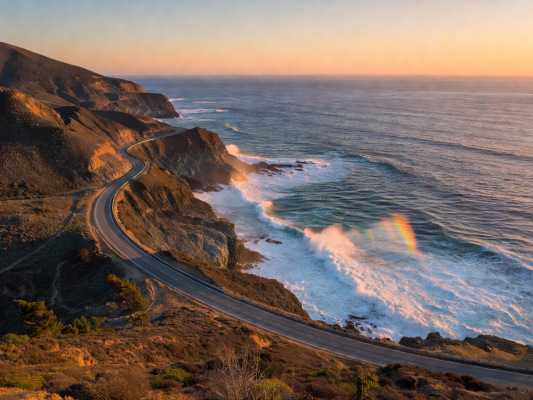
Driving California's Highway 1—the Pacific Coast Highway (PCH)—is a defining road trip experience. Transitioning this journey to an electric vehicle requires shifting your mindset from refuelling to strategic charging. The route spans roughly 655 miles from San Francisco to San Diego, hugging cliffs, passing through dense coastal forests, and skirting long stretches of beach. While range anxiety was a legitimate concern on this route a decade ago, the infrastructure today is robust enough to make the journey not just possible, but highly enjoyable, provided you understand the geography of the charging network.
The Big Sur Bottleneck
The most critical section of the PCH for any EV driver is the stretch through Big Sur. Spanning approximately 90 miles between Carmel-by-the-Sea in the north and San Simeon in the south, this dramatic coastal region features twisting roads, significant elevation changes, and critically, a distinct lack of DC fast-charging infrastructure. Cellular service is also practically non-existent, meaning you cannot rely on apps to check charger status on the fly.
To navigate this bottleneck safely:
- Charge to 100% in Monterey or Carmel: Do not enter the Big Sur stretch with anything less than an 80% state of charge (SoC). There are numerous fast chargers in Monterey, including Tesla Superchargers and Electrify America stations.
- Utilize Destination Charging: If you are staying overnight in Big Sur, confirm that your accommodation has a Level 2 charger. Hotels like the Ventana and Post Ranch Inn offer dedicated EV infrastructure for guests.
- Mind Your Speed: The winding nature of the road naturally limits speed, which is beneficial for efficiency. However, aggressive acceleration out of corners will rapidly deplete your battery. Utilize one-pedal driving to maximize regenerative braking.
Infrastructure Overview: NorCal vs. SoCal
The character of the charging network changes as you move south.
Northern and Central Coast
From San Francisco down through Half Moon Bay and Santa Cruz, infrastructure is dense. You will find a mix of ChargePoint Level 2 chargers in municipal lots and high-speed EVgo stations near retail centres. As you push past Monterey into San Luis Obispo County, the reliance shifts heavily toward established hubs located near Highway 101, which briefly merges with or runs parallel to Highway 1.
Southern California Integration
Once you reach Santa Barbara and continue through Malibu toward Los Angeles, the sheer volume of EVs on the road translates to a vast charging network. However, high density brings high utilization. Expect queues at popular fast-charging sites during weekends and public holidays. Planning stops during off-peak hours (early morning or late evening) is highly recommended to avoid delays.
Maximizing the Experience
The primary advantage of EV touring is the alignment of charging time with sightseeing. The PCH is designed for lingering. Instead of viewing a 45-minute charge as a delay, frame it as an opportunity. A stop in Morro Bay allows for a seafood lunch while plugged into a DC fast charger; a session in Santa Barbara provides time to walk State Street.
When selecting a vehicle for this route, raw range is less critical than charging curve efficiency. A vehicle that can sustain a high charge rate up to 80% is vastly superior to one with a marginally larger battery but a slow charging profile, as it minimizes dwell time at public stations.