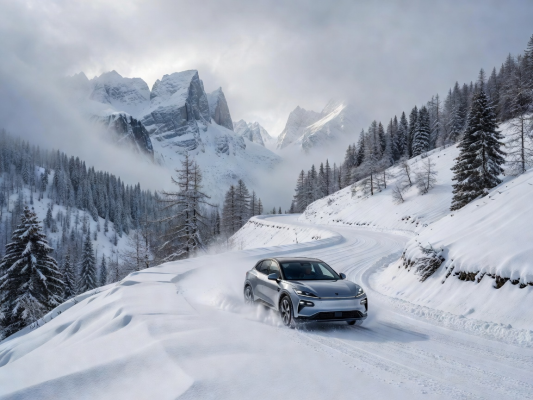
The Grand Tour of Switzerland strings together the country's most spectacular alpine passes, pristine lakes, and historic cities. For an electric vehicle, driving in the high Alps presents a fascinating interplay of physics: massive energy consumption on the ascents, followed by significant energy recovery on the descents. Understanding this dynamic is the key to successfully navigating routes like the Furka, Susten, and Grimsel passes without succumbing to range anxiety.
The Physics of Alpine EV Driving
Internal combustion engine (ICE) vehicles suffer at altitude; thinner air reduces oxygen intake, leading to a loss of horsepower. Electric motors, however, are entirely immune to altitude changes. You retain full torque and power regardless of whether you are at sea level in Geneva or at 2,400 meters on the Furka Pass.
The challenge lies in gravity. Lifting a two-tonne battery pack up a steep mountain requires immense energy. It is common to see consumption figures spike dramatically during an ascent—sometimes tripling normal highway usage. If you are relying solely on the car's estimated remaining range, watching those numbers plummet can be unnerving. However, this energy is not lost; it is stored as potential energy.
Mastering Regenerative Braking
The descent is where the EV shines. By setting your regenerative braking to its maximum level, the vehicle uses the electric motor to slow the car, simultaneously converting that kinetic energy back into electricity and feeding it into the battery. On a long descent from a high alpine pass, you can expect to recover a significant percentage of the energy used on the climb.
- Avoid 100% Charge at the Summit: If you charge to 100% at a high-altitude resort before descending, you will have no capacity in the battery to accept regenerated energy. You will be forced to use friction brakes, wasting energy and risking brake fade. Aim to leave summits with no more than 80-85% charge.
- One-Pedal Driving: Utilize one-pedal modes for smooth, continuous regeneration through the hairpin bends.
Charging Infrastructure in Switzerland
Switzerland possesses one of the most mature and reliable charging networks in Europe. The country has heavily invested in EV infrastructure to support its sustainability goals, making the Grand Tour exceptionally EV-friendly.
Key Network Operators
You will frequently encounter high-speed hubs operated by GOFAST, Ionity, and the Tesla Supercharger network. Swiss motorway rest stops are consistently well-equipped. In alpine villages and ski resorts, destination charging is widespread. Major hotel chains and independent alpine lodges often provide 11kW or 22kW Type 2 sockets for overnight charging.
Payment interoperability is excellent. Most public chargers accept roaming apps or standard RFID cards (like Plugsurfing or Shell Recharge), and increasingly, direct contactless credit card payments. However, having a dedicated Swiss network app, such as Swisscharge, as a backup is advisable.
Thermal Management in the Mountains
Alpine touring often involves significant temperature fluctuations. You might start a climb in a warm valley and face near-freezing temperatures at the summit. Cold weather increases the internal resistance of the battery, slightly reducing efficiency and, more importantly, severely limiting DC fast charging speeds if the battery is cold.
To mitigate this, utilize your vehicle's battery pre-conditioning feature. If you navigate to a fast charger using the car's built-in GPS, the system will automatically warm the battery to optimal temperatures during the final miles of your drive, ensuring you achieve the maximum possible charging rate upon arrival.